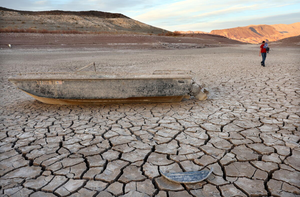
The Jordan River—a sacred arterial thread winding through the heart of the Levant—is collapsing. Historically, over 1.3 billion cubic meters of freshwater rushed through this basin annually, nourishing ancient ecosystems, sustaining civilizational crossroads, and feeding the Dead Sea. Today, that mighty deluge has shrunk by more than 90 percent, leaving behind a sluggish, polluted trickle.
What was once a vibrant river is now an ecological emergency. Understanding why the Jordan River is drying up, confronting the domino effect of its destruction, and enforcing bold regional solutions is no longer just an environmental priority—it is a matter of regional survival.
The Anatomy of a Collapse: Why the River is Dying
The demise of the Jordan River is not an act of nature; it is a direct consequence of human engineering, geopolitical tension, and climate change.
- Massive Upstream Diversions: Over the past six decades, neighboring nations have aggressively dammed and diverted the river’s tributaries, such as the Yarmouk and Upper Jordan rivers. Huge volumes of water are siphoned off long before they can reach the lower Jordan Valley.
- Extreme Agricultural Overpumping: Agriculture consumes over 60 percent of regional freshwater. Outdated agricultural policies encourage the cultivation of thirsty crops in arid soil, draining local aquifers faster than rain can replenish them.
- Untreated Sewage and Runoff: As fresh headwaters are diverted, what remains of the river is routinely contaminated by untreated municipal wastewater, saline spring diversions, and toxic agricultural runoff laden with pesticides.
- Accelerating Climate Change: Rising temperatures in the Middle East have intensified evaporation rates while shortening winter rainfall windows, plunging the region into prolonged droughts.
Massive Ecological Consequences
The ecological toll of this anthropogenic drying is catastrophic, affecting both terrestrial and aquatic ecosystems across borderlines.
1. The Terminal Crisis of the Dead Sea
Because the Jordan River is the primary freshwater inlet for the Dead Sea, the river’s reduction acts as a death sentence for the terminal lake. The Dead Sea’s surface level is plummeting by over 1 meter (3.3 feet) every year. As the waterline retreats, thousands of unpredictable, destructive sinkholes collapse along the shorelines, destroying infrastructure and swallowing land.
2. Loss of Biodiversity and Habitat Ruin
The Jordan River Valley serves as a critical migratory corridor for millions of birds traveling between Europe and Africa. The disappearance of wetlands and riverbank vegetation deprives migratory birds, native mammals, and aquatic species of essential stopovers and habitats. High salinity and concentrated pollutants have turned wide stretches of the lower river into hostile dead zones incapable of supporting indigenous freshwater life.
3. Aquifer Depletion and Soil Salinization
As surface water vanishes, communities overpump groundwater reserves. This over-extraction destabilizes regional aquifers, causing saltwater intrusion that permanently ruins groundwater quality and renders fertile soils increasingly sterile.
The Path Forward: Pragmatic and Radical Solutions
Reversing this disaster requires abandoning shortsighted resource management in favor of aggressive, cross-border eco-engineering.
1. Ban Water-Thirsty Crops in Arid Basins
It is ecological madness to cultivate water-intensive crops like bananas, citrus, and sugarcane in a desert ecosystem using precious river water. Regional governments must enact strict agricultural reforms:
- Crop Shifting: Enforce mandates banning water-thirsty crops in favor of drought-tolerant alternatives such as olives, dates, and high-value hydroponics.
- Modernized Irrigation: Mandate closed-loop drip irrigation and precision sensor farming across all commercial plots.
- Price Restructuring: Eliminate subsidies for agricultural water extraction to force commercial growers to internalize the true cost of water usage.
2. Re-evaluate and Execute the Red Sea–Dead Sea Conveyance
The ambitious Red Sea–Dead Sea Water Conveyance project—designed to pump seawater from the Gulf of Aqaba, desalinate it for regional drinking supply, and discharge the hyper-saline brine into the shrinking Dead Sea—has faced political and financial delays. Regional leaders must revive and modernize this initiative:
- Replenish Water Levels: Stabilize the Dead Sea level to halt sinkhole proliferation and ecosystem degradation.
- Green Desalination: Power the mega-conveyance pumping stations using regional solar infrastructure to offset energy demands.
- Transboundary Water Swaps: Facilitate large-scale agreements where desalinated coastal water is exchanged for inland river flow guarantees, ensuring minimum environmental flows are returned to the lower Jordan River.
3. Strict Environmental Flow Mandates
Ecological restoration cannot occur without returning actual freshwater to the riverbed. Regional treaties must legally mandate leaving at least 55 percent of the Jordan River’s natural flow untouched for ecosystem preservation, while strictly regulating dam releases and enforcing tertiary sewage treatment standards so that discharged water actively revitalizes the river basin.
A Shared Responsibility for a Shared Future
The drying of the Jordan River is more than a localized environmental tragedy; it is an urgent warning of what happens when natural resources are treated as infinite bargaining chips. For centuries, this valley has bound diverse cultures, faiths, and communities together through a shared dependence on its waters. Allowing it to disappear into a dry, polluted trench surrenders a cornerstone of regional identity and stability.
Restoring the Jordan requires courage, shared political will, and an acknowledgment that ecological borders do not stop at national boundaries. By enforcing strict 55 percent environmental flows, banning water-thirsty crops in arid zones, and realizing green-powered infrastructure like the Red Sea–Dead Sea conveyance, regional partners can prove that environmental restoration can serve as a catalyst for peace. The clock is ticking, but with bold, unified action, we can still breathe life back into this historic river before it fades into memory.