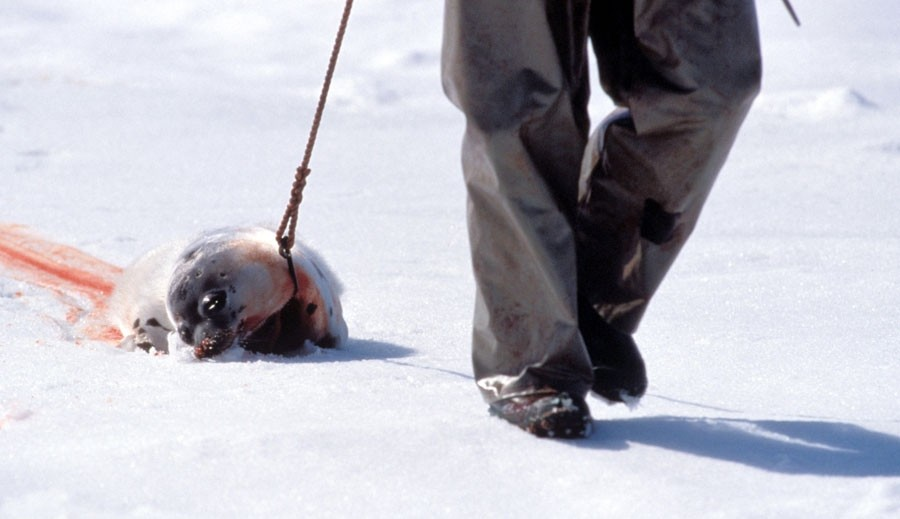
Every autumn, in the cold, slate-gray waters of the North Atlantic and the secluded coastal bays of the Pacific, the sea turns red. It is not a metaphorical redness, nor is it the natural pigment of seasonal change. It is blood—liters upon liters of warm, oxygenated blood spilling from the severed arteries of creatures who were, mere moments before, singing across vast miles of ocean darkness.
For centuries, humanity has treated the oceans as an endless storehouse and an open execution chamber. While modern society has begun to grapple with the ethics of industrial animal agriculture on land, a blind spot remains over the horizon. Marine mammals—whales, dolphins, porpoises, seals, sea lions, walruses, and manatees—continue to be hunted, speared, clubbed, and harpooned across the globe.
This must stop. The hunting of all marine mammals, by anyone, anywhere, under any pretext or justification, must be banned immediately and universally. There are no valid exceptions. There are no ethical loopholes. The continued slaughter of these non-human persons is the greatest moral failure of our era, and the time for half-measures, regional exemptions, and diplomatic compromises has expired.
The Illusion of “Sustainable Harvesting”
For decades, international management bodies and pro-hunting advocates have hidden behind the sterilizing vocabulary of natural resource management. They speak of “stocks,” “quota allocations,” “maximum sustainable yields,” and “harvesting.”
This language is an intentional shield designed to obscure a brutal reality. You cannot “harvest” an individual who possesses self-awareness, a complex emotional life, cultural traditions, and a distinct personality.
Whales and dolphins do not merely exist in ecosystems; they inhabit complex societies. Marine mammalogists have documented that cetaceans name themselves with unique signature whistles, pass down hunting techniques across generations, mourn their dead, and display levels of encephalization—brain-to-body mass ratio—that rival and, in some areas of emotional processing, exceed that of humans.
When a harpoon strikes a fin whale or a club strikes a harp seal pup, we are not harvesting a renewable natural resource. We are ending a life of profound psychological and social complexity. The argument that a population is “stable enough to sustain a hunt” is fundamentally bankrupt. It evaluates living, feeling individuals purely by their metric tonnage and reproductive output.
If human rights taught us anything in the twentieth century, it is that an individual’s fundamental right to life cannot be traded away for the convenience, tradition, or economic appetite of the collective. Animal rights demands that same recognition for the sentient inhabitants of the sea.
The Reality of the Kill: Unavoidable Cruelty
There is no such thing as a humane hunt in the open ocean.
On land, target shooting or veterinary euthanasia can, in theory, minimize suffering. In the sea, where both the hunter’s vessel and the target are moving unpredictably through dynamic waves, precision is impossible.
Consider the modern commercial whale hunt. Exploding harpoons—spears tipped with penthrite grenades—are fired into the backs of broad whales. The intention is to detonate inside the animal, causing massive neurogenic shock or immediate brain death. Yet, official logs and observer reports reveal that death is rarely instantaneous. Whales frequently endure agonizing death throes lasting twenty minutes, thirty minutes, or longer, thrashing in terror as their lungs fill with blood while they are dragged toward the processing ship.
Consider the drive hunts of smaller cetaceans. Pods of dolphins and pilot whales are terrorized using acoustic walls of sound, driven into shallow coves, trapped with nets, and killed one by one while their family members watch and thrash in the blood-soaked shallows. The terror experienced by these animals in their final hours is total, absolute, and unmitigated.
To call this practice “tradition” or “industry” is to sanitize torture. No human desire for meat, oil, blubber, or cultural continuity can outweigh the catastrophic physical agony and psychological horror inflicted upon these creatures during their execution.
Unmasking the Culprits: Commercial Greed and Tribal Exceptionalism
If we are to achieve total abolition, we must stop hiding behind generalized outrage and directly name the perpetrators of this oceanic violence.
First, we must condemn the nations that operate industrial commercial whaling fleets under the banner of corporate market demand:
- Japan and Kyodo Senpaku: Operating modern factory ships like the Kangei Maru, Japan’s commercial whaling apparatus harvests fin, Bryde’s, and minke whales within its Exclusive Economic Zone. Subsidized by the state, this commercial enterprise turns self-aware giants into commercial products.
- Norway: Defying the International Whaling Commission’s moratorium, Norwegian fleets fire explosive harpoons into hundreds of minke whales every season off the northern coast, processing their bodies into commercial meat and animal feed.
- The Faroe Islands (Denmark): Every year, islanders participate in the Grindadráp, driving whole pods of long-finned pilot whales and dolphins into shallow coastal bays. They drag them ashore with metal gaffs driven into their blowholes and sever their spinal cords while family members watch in terror.
Second, an unyielding animal rights stance must reject the moral immunity granted to indigenous and tribal hunts. Suffering is not erased because the hunter claims an ancestral right:
- The Inuit Communities (Arctic Regions): In Alaska, Canada, Greenland, and Russia, tribal quotas allow the hunting of narwhals, belugas, bowhead whales, and walruses. Armed with high-powered rifles and motorboats, these hunts frequently result in high “struck-and-lost” rates, leaving wounded cetaceans to sink beneath the ice and suffocate in agony.
- The Makah Tribe (United States): In Washington State, the Makah Tribe has fought for decades to resume hunting Eastern North Pacific gray whales under the 1855 Treaty of Neah Bay. Firing heavy-caliber rifles and harpoons into migrating gray whales in the name of historical restoration is an unconscionable assertion of human privilege over an animal’s right to live.
A harpoon tore through a spinal column inflicts the exact same horrific suffering whether it is thrown from a 9,000-ton Japanese commercial vessel or an Alaskan tribal skiff. Corporate profit and ancient heritage are equally invalid justifications for slaughter.
The Universal Scope of Animal Rights
A truly ethical framework for animal rights does not bend for geographical borders, cultural heritage, or political expediency. The right to live free from human violence is inherent to the animal; it is not granted by human consent, nor should it be revoked by human custom.
For too long, the global conversation surrounding marine mammal hunting has been derailed by moral relativism. Opponents of hunting are accused of cultural imperialism, while defenders hide behind historical practices to justify ongoing carnage. But tradition is an explanation, not a justification. Humanity has abandoned countess historical traditions—from public executions to legal slavery—as our moral consciousness evolved. Cruelty does not become benevolent simply because it has been performed for generations.
Every single marine mammal is an autonomous individual with an intrinsic right to exist free from human persecution. Whether the hunt is conducted by a multinational commercial fleet using factory ships, or a local community using wooden boats, the result for the victim is identical: terror, pain, and premature death.
If we accept that non-human animals have basic moral standing—that their capacity to suffer grants them the right not to be tortured and killed—then the prohibition on hunting must be absolute. There can be no special dispensations. The ocean belongs to its native inhabitants, not to human appetites or ancestral claims.
The Ecological Imperative: Ocean Guardians
Beyond the undeniable moral argument for individual rights lies an ecological reality: marine mammals are the vital engineers of the global ocean system.
Whales, in particular, play a central role in mitigating climate change and maintaining oceanic life through what scientists call the “whale pump.” By feeding at depth and defecating at the surface, they distribute essential nutrients like iron and nitrogen throughout the photic zone, fertilizing the phytoplankton that generates over half of the Earth’s oxygen and absorbs immense quantities of atmospheric carbon. When a whale dies naturally, its body sinks to the abyssal sea floor, carrying carbon away from the atmosphere for centuries while sustaining entire deep-sea ecosystems.
To hunt these creatures is to dismantle the very life-support systems of our planet. In an era defined by global climate collapse, ocean acidification, and biodiversity loss, the continued destruction of key marine species is an act of ecological vandalism that threatens all life on Earth.
The Path Forward: Total Abolition
We stand at a critical crossroads. We can continue to debate quotas, haggle over international treaties, grant cultural exemptions, and turn a blind eye to the coastal coves where the sea runs red. Or we can step forward into a new era of moral responsibility.
An immediate, total global ban on the hunting of all marine mammals is not an unachievable ideal; it is an urgent moral necessity. Nations must enact strict domestic legislation, enforce international bans through marine border patrols, and levy severe sanctions against any state, commercial enterprise, or tribal entity that continues to permit the slaughter of cetaceans, seals, and other marine mammals.
The ocean has given humanity life, climate regulation, and awe for millennia. In return, we have poisoned its waters, filled it with plastic, and hunted its most intelligent children to the brink of collapse. The absolute minimum we owe to the sea and its inhabitants is their safety from our harpoons, knives, and clubs.
The bloody waters must clear. The singing in the deep must be allowed to continue uninterrupted. The hunting of marine mammals—by commercial fleets and indigenous tribes alike—must end completely, permanently, and today.