One of the darkest chapters in American History
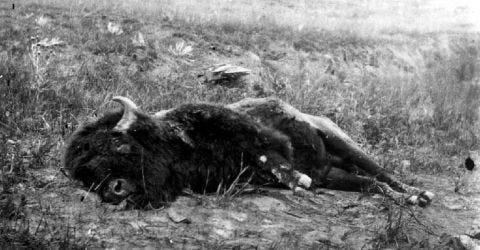
The story of the American bison is one of tragedy, resilience, and hope: once nearly exterminated by human actions, these iconic animals are now being restored through conservation efforts, offering lessons on how we can build a better future for wildlife.
The Rise and Fall of the American Bison
• Once numbering in the tens of millions, bison roamed the Great Plains as a keystone species, shaping ecosystems and sustaining Indigenous cultures.
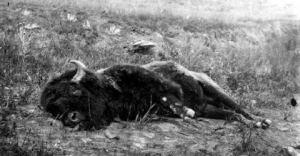
• By the late 19th century, their population had plummeted to fewer than 1,000 individuals.
• The causes were stark:
• Overhunting: Fueled by demand for hides and meat, and facilitated by the transcontinental railroad.
• Military strategy: The U.S. Army encouraged bison slaughter to undermine Native American tribes by destroying their primary food source.
• Habitat destruction: Expansion of settlements and agriculture fragmented the grasslands.
This extermination was not just ecological — it was cultural. For Indigenous peoples, bison were central to food, clothing, shelter, and spiritual life. Their near disappearance represented a devastating blow to Native communities.
Conservation: A Story of Resilience
The early 20th century marked a turning point. Conservationists like William Hornady and organizations such as the American Bison Society began efforts to save the species.
• Protected areas: Yellowstone National Park became a refuge, safeguarding one of the last wild herds.
• Breeding programs: Zoos and private ranches helped rebuild populations.
• Indigenous leadership: Tribes across North America have led reintroduction projects, restoring bison to tribal lands and cultural practices.
• Modern numbers: Today, there are about 500,000 bison, though most live in commercial herds. Only around 20,000 are in conservation herds managed for ecological and cultural purposes.
Building a Better Future for Bison
While progress has been made, challenges remain. To secure a thriving future for bison, several steps are crucial:
1. Expand Wild Herds
• Increase the number of bison in conservation herds rather than commercial ranches.
• Support rewilding projects that restore bison to grassland ecosystems.
2. Strengthen Indigenous Partnerships
• Recognize and empower Indigenous-led conservation, which integrates cultural traditions with ecological stewardship.
• Expand initiatives like the Intertribal Buffalo Council, which has already reintroduced bison to dozens of tribal lands.
3. Protect Grassland Habitats
• Grasslands are among the most endangered ecosystems in North America.
• Restoring these habitats benefits not only bison but also countless other species.
4. Public Engagement
• Encourage ecotourism and education that highlight bison’s ecological and cultural importance.
• Build public support for policies that prioritize biodiversity.
Lessons for the Future
The bison’s story is a reminder of both human capacity for destruction and renewal. Their near-extinction was deliberate, but their recovery shows what is possible when conservationists, Indigenous communities, and governments work together.
By protecting bison, we are not only saving a species — we are restoring ecosystems, honoring Indigenous heritage, and redefining our relationship with nature. The path forward demands humility, collaboration, and a commitment to ensuring that the mistakes of the past are never repeated.
Here’s a link to my Youtube Video about this:
https://youtu.be/33BeDZ8DaWs