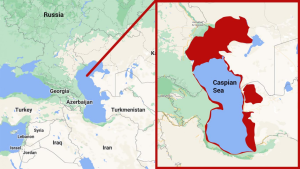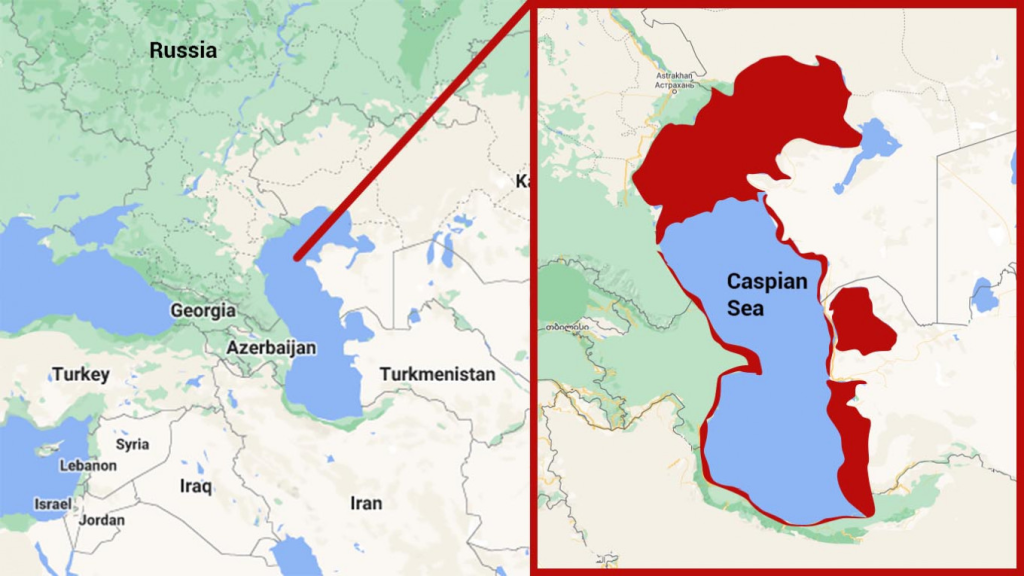
The Caspian Sea, the world’s largest inland body of water, is quietly vanishing. Scientists warn that by the end of this century, the sea could lose up to one-third of its surface area and drop more than 20 meters in depth. This isn’t just a local environmental issue—it’s a looming ecological, economic, and geopolitical crisis that could reshape Eurasia.
🌍 Why the Caspian Sea Matters
The Caspian Sea is more than a vast stretch of water—it’s a cornerstone of life and commerce across five nations: Russia, Iran, Azerbaijan, Kazakhstan, and Turkmenistan.
- Biodiversity hotspot: It’s home to unique species like the Caspian seal and sturgeon, the latter being the source of the world’s most prized caviar.
- Economic lifeline: Fishing, shipping, and energy industries depend on its waters. Ports along its shores are vital trade hubs.
- Climate regulator: Its sheer size influences regional weather patterns and ecosystems.
- Geopolitical significance: Oil and gas pipelines, as well as maritime routes, make it a strategic energy corridor.
⚠️ What Happens If It Dries Up
Imagine the Caspian Sea shrinking into scattered salt flats. The consequences would be catastrophic:
- Human displacement: Millions living along its shores could lose their livelihoods.
- Ecosystem collapse: Wetlands would vanish, migratory bird routes would be disrupted, and endemic species could face extinction.
- Economic fallout: Ports and pipelines would be stranded, disrupting global energy markets.
- Geopolitical instability: Competition for dwindling resources could heighten tensions among bordering nations.
This scenario echoes the tragedy of the Aral Sea, once the world’s fourth-largest lake, now reduced to a fraction of its size due to mismanagement and climate pressures.
📉 Why the Sea Is Shrinking
The Caspian’s decline is driven by a mix of natural and human factors:
- Climate change: Rising temperatures accelerate evaporation.
- Reduced inflows: The Volga River, which supplies 80% of the Caspian’s water, is increasingly diverted for agriculture and industry.
- Unsustainable development: Pollution, overfishing, and unchecked industrial activity weaken its resilience.
✅ How We Can Save the Caspian Sea
The crisis isn’t inevitable. With coordinated action, the Caspian can be preserved:
- Regional cooperation: Binding agreements among the five littoral states to manage water inflows and protect ecosystems.
- Climate action: Global efforts to reduce greenhouse gas emissions and slow warming.
- Sustainable water management: Limiting diversion of rivers feeding the Caspian, especially the Volga.
- Ecological restoration: Protecting wetlands, regulating fishing, and reducing pollution.
- Infrastructure adaptation: Redesigning ports and energy facilities to cope with fluctuating water levels.
📌 Final Thought
The Caspian Sea is not just a body of water—it’s a living system, an economic artery, and a geopolitical anchor. Its decline would ripple far beyond its shores, affecting ecosystems, economies, and global energy security. Saving it requires urgent, coordinated action across borders and a renewed global commitment to tackling climate change.
If the Aral Sea taught us anything, it’s that ignoring the warning signs leads to irreversible loss. The Caspian Sea still has a chance—but only if we act now.